

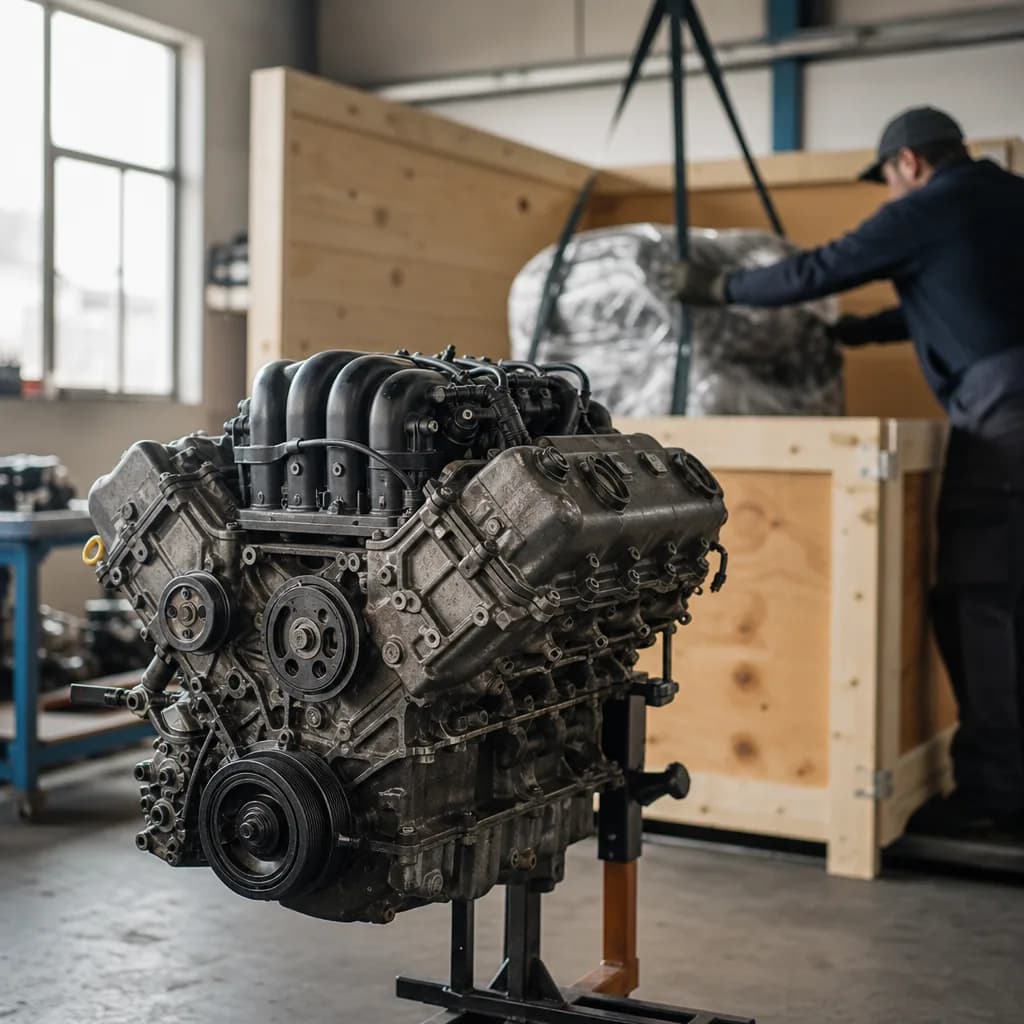
Shipping a used engine across borders can feel tricky. But it is often the smartest way to get a quality part.
You can save hundreds or even thousands of euros. Plus you get a genuine used OEM engine that fits your car perfectly.
Why Ship a Used Engine Instead of Buying New
A brand new engine from the dealer can cost more than your car is worth. A used one offers big savings.
Used OEM engines are original parts. They came from a car that was dismantled. They are tested and cleaned before shipping.
Many engines have low mileage and plenty of life left. You get reliability without paying a new price.
Compare prices from dismantlers near you. Often the best deal is in another country.
What Makes Up the Total Cost to Ship an Engine
You need to understand all the fees before you buy. The price is not just for the part.
The Engine Price
The engine cost depends on make, model, and condition. Common engines like for a Toyota or Ford can be less than 1000 euros.
Rare engines for a BMW M-series or Mercedes AMG cost more. Always check the OEM code to confirm fitment.
Shipping and Insurance
Shipping a heavy engine costs more than a small part. Expect to pay 200 to 500 euros for delivery within Europe.
For shipping to other continents, costs can be 500 to 1500 euros. Insurance is extra but recommended.
Customs Duties and Taxes
Customs fees depend on the country you ship to. In the EU, there are no duties on parts from another EU country.
If you import from outside the EU, you may pay import duties and VAT. These can add 20% to 30% to the total.
Work with a service that handles customs for you. Auto128 handles all export and customs so you don't have to.
Packing and Crating
An engine must be securely packed. It is usually strapped to a wooden pallet and wrapped in plastic.
A good crate costs about 50 to 100 euros. It protects against damage and leaks.
Customs Clearance Step by Step
Customs can seem scary but it is routine. You need the right paperwork.
Documents You Need
The most important document is the commercial invoice. It lists the part, value, and origin.
A bill of lading or airway bill shows the shipment details. Finally, a certificate of origin may be needed.
If you ship an engine that contains oil or fuel, you may need a safety data sheet. Most used engines are drained beforehand.
How Duties and Taxes Are Calculated
Customs uses the Harmonized System (HS) code for engines. Engines usually fall under code 8407 or 8408.
You pay a duty rate based on the country of origin. For most countries, it is between 3% and 8% of the engine value.
Then VAT is applied on top of the duty. Rates vary by country, typically 15% to 25%.
For example, a 1000 euro engine shipped to a 20% VAT country might cost 200 euros in VAT plus 50 euros in duty.
Tips to Avoid Customs Delays
Make sure the commercial invoice is accurate. Do not undervalue the engine as it can cause fines.
Use a carrier that knows customs rules. Many shipping companies offer customs brokerage.
Read our FAQ for more on customs and shipping.
Timelines: How Long Does It Take to Get an Engine
Shipping times vary. Plan ahead for your repair.
Within Europe
By road freight, delivery takes 2 to 5 business days. Express courier can be 1 to 3 days.
Standard economy shipping is slower but cheaper. Expect 5 to 10 business days.
Customs clearance adds little time within the EU. Most shipments go through in one day.
To the USA or Canada
Air freight takes about 3 to 7 business days. Sea freight takes 3 to 6 weeks.
Sea freight is cheaper but slow. It is good for non-urgent projects.
Customs in the USA usually takes 1 to 3 days. Make sure your paperwork is complete.
To Asia, Africa or Australia
Air freight to these regions takes 5 to 10 business days. Sea freight takes 4 to 8 weeks.
Customs clearance can vary. Some countries inspect every package and may take a week.
Always ask the seller or shipping company for an estimate. Contact us to get a specific timeline for your country.
How Auto128 Makes Shipping Easy
Auto128 works with professional dismantlers across Europe. We ship used OEM engines worldwide.
When you search on our site, you get the exact OEM code. We confirm fitment before you buy.
We handle export paperwork and customs clearance. You just provide your address and we do the rest.
Shipping is tracked door to door. You can see where your engine is at every step.
We source parts from reputable yards. Each engine is inspected and drained of fluids.
Browse parts by brand to find your engine. We cover all major makes.
Risks and How to Avoid Them
Shipping a heavy engine can have problems. Here are common issues and how to avoid them.
Damage in Transit
Engines are heavy and can shift inside a truck. Proper crating is key.
Make sure the engine is strapped tightly to a pallet. Use cushioning material around fragile parts.
Insure the shipment for its full value. That way you are covered if something goes wrong.
Customs Seizure
If documents are wrong, customs may seize the engine. Always use correct HS codes and values.
Do not ship engines with oil or fuel still inside. This can be considered hazardous material.
Work with a service that handles customs compliance. Our FAQ explains how we ensure safe delivery.
Wrong Engine Arrives
The biggest risk is getting an engine that does not fit. Double check the OEM code matches your car.
Auto128 verifies compatibility before shipping. But you can also check with your VIN.
Ask the seller for photos of the engine block, serial number, and any written guarantee.
Environmental and Legal Considerations
Used engines are a green choice. They keep parts out of landfills and reduce demand for new manufacturing.
But shipping requires handling of residual fluids. All engines shipped by Auto128 are drained and cleaned.
Some countries have restrictions on used engine imports. Check with your local authorities before ordering.
For example, some countries require engines to be no older than a certain year. Others require emissions certification.
We can help you understand the rules for your country. Contact us for country-specific advice.
Summary: Key Points for a Smooth Shipment
To sum up, shipping a used engine internationally is straightforward if you know the steps.
- Always confirm the OEM part number fits your car.
- Get a shipping quote that includes insurance.
- Prepare for customs duties and taxes.
- Choose a reputable dismantler or service like Auto128.
- Insure the engine for its full value.
- Plan for delivery time that works for your repair schedule.
With the right partner, you can get a quality used engine delivered to your door. You save money and get a genuine part that lasts.
Start your search today on Auto128. Find the engine you need and let us handle the rest.
Related Auto128 pages
Find and order the exact OEM part you need:
- About Auto128: who we are and why buying used genuine parts is safe.
Frequently asked questions
How much does it cost to ship a used engine internationally?
The total cost includes the engine price (usually 500 to 3000 euros), shipping (200 to 1500 euros depending on distance), and customs duties plus VAT (often 20% to 30% of the value). Auto128 can give you a precise quote.
How long does it take to receive a used engine from Europe?
Within Europe, delivery takes 2 to 10 business days by road. To the USA, air freight takes about 3 to 7 days, sea freight 3 to 6 weeks. To other continents, air is 5 to 10 days, sea 4 to 8 weeks.
What documents do I need for customs clearance?
You need a commercial invoice, bill of lading or airway bill, and sometimes a certificate of origin. Auto128 prepares all documents for you.
Can I track my engine shipment?
Yes, Auto128 provides door-to-door tracking. You can monitor your package at every stage from our dismantler to your address.
What if the engine arrives damaged?
We recommend full insurance coverage. If damage occurs, you file a claim with the carrier. Auto128 helps you through the process.


